

Articles
History of Plywood: From Ancient Egypt to Today
The History and Development of Plywood
The history of plywood stretches back thousands of years, from ancient Egyptian furniture to modern engineered construction panels. Today, plywood plays an essential role in building homes, manufacturing furniture, constructing concrete formwork and creating high-performance timber structures.
However, the plywood we know today developed through centuries of innovation in timber processing, adhesives and manufacturing technology.
At Green Block Shop, we appreciate how this remarkable material has transformed modern construction.
The History of Plywood Begins in Ancient Egypt
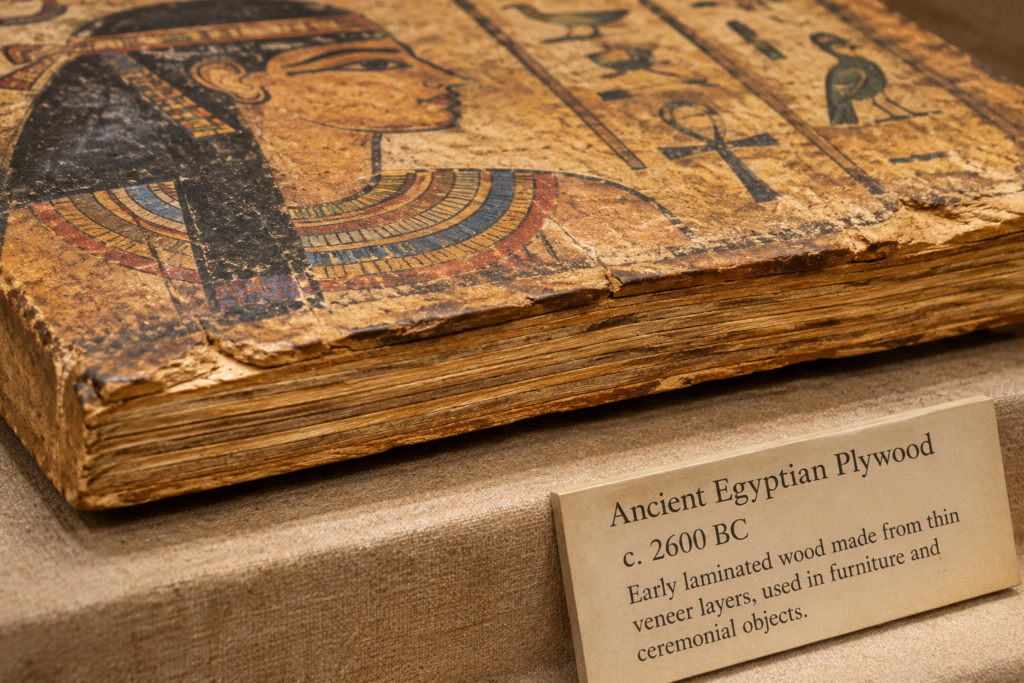
The earliest known examples of laminated wood date back to approximately 2600 BC in ancient Egypt.
Craftsmen discovered that bonding thin layers of wood together could create attractive and useful products. They used these techniques primarily for furniture and decorative applications.
Although these early products differed from modern plywood, they established the principle of combining timber layers to improve performance.
The Industrial Revolution Transformed Plywood
The development of modern plywood accelerated during the nineteenth century.
In 1865, American inventor John K. Mayo received a patent describing a material made from thin wood layers bonded together with alternating grain directions.
Meanwhile, improvements in veneer-cutting machinery allowed manufacturers to produce thin timber sheets more efficiently.
Consequently, plywood gradually moved from specialist furniture workshops into industrial production.
The Early 1900s Changed Everything
The history of plywood entered a new era during the early twentieth century.
Manufacturers began producing larger plywood sheets using rotary-cut veneers and mechanical presses.
Furthermore, improved manufacturing methods made plywood more affordable and consistent.
By 1933, the Douglas Fir Plywood Association had formed in the United States to promote product standards and improve industry confidence.
As a result, plywood developed into a recognised construction material.
Waterproof Glue Revolutionised Plywood
One of the most important developments came with synthetic adhesives.
Early plywood manufacturers often relied on animal-based and vegetable-based glues. Unfortunately, many of these adhesives performed poorly when exposed to moisture.
However, the development of Phenol Formaldehyde (PF) glue transformed the industry during the 1930s.
PF glue created strong, moisture-resistant bonds between timber veneers.
Consequently, manufacturers could produce plywood suitable for more demanding structural and exterior applications.
Today, PF glue remains an important adhesive in quality construction plywood.
Plywood Helped Build the Modern World
During the Second World War, manufacturers used plywood in aircraft, boats, military structures and transport equipment.
Its combination of strength, relatively low weight and manufacturing versatility made it particularly valuable.
After the war, residential construction expanded rapidly. Therefore, demand for plywood increased as builders adopted it for floors, roofs, walls and other building components.
Plywood had become much more than a furniture material.
It had become an essential part of modern construction.
The Development of Modern Structural Plywood
Modern plywood manufacturers arrange thin timber veneers with alternating grain directions.
This cross-laminated construction improves dimensional stability and distributes strength in different directions.
Furthermore, manufacturers can produce panels with different timber species, thicknesses, veneer grades and adhesive systems.
Today, the industry manufactures plywood for a wide variety of applications, including:
- Structural wall and roof sheathing
- Timber-frame construction
- Concrete formwork and shutterply
- Flooring and subfloors
- Furniture and cabinetry
- Packaging and industrial applications
However, not every plywood sheet is suitable for structural or exterior use. Buyers must select the correct grade and specification.
Why Shutterply Became Important in Construction
The development of concrete construction created another major opportunity for plywood.
Contractors needed strong, practical panels to support wet concrete while it hardened.
Consequently, plywood became a popular material for concrete formwork.
Modern shutterply combines layered timber construction with suitable adhesive systems and panel specifications.
Furthermore, properly manufactured and maintained shutterply can support repeated use, helping contractors improve productivity and control construction costs.
The Future of Plywood Manufacturing
Plywood technology continues to develop.
Modern factories use automated veneer processing, precision cutting, controlled pressing and advanced quality inspections.
Meanwhile, manufacturers continue improving adhesive systems, production efficiency and responsible timber sourcing.
As timber construction expands, structural plywood will remain an important component in engineered building systems.
Therefore, the future of plywood lies in combining established timber technology with increasingly precise manufacturing methods.
Why Green Block Shop Values Quality Plywood
At Green Block Shop, we understand that plywood quality involves much more than thickness and appearance.
Timber species, veneer quality, adhesive performance, manufacturing precision and product grading all influence how a sheet performs.
Consequently, we focus on supplying plywood products that provide practical value to South African builders, contractors and construction businesses.
Our plywood range includes products for demanding construction applications, including shutterply.
Conclusion
The history of plywood demonstrates how a simple idea developed into one of the world’s most versatile engineered wood products.
From ancient Egyptian craftsmanship to modern automated factories, plywood has continually evolved through innovation.
Today, it supports everything from furniture manufacturing to large-scale construction.
At Green Block Shop, we believe that understanding the materials we use helps us build better, stronger and more efficiently.
Green Block Shop. Quality materials for better building.
Explore our construction products at www.greenblockshop.co.za.